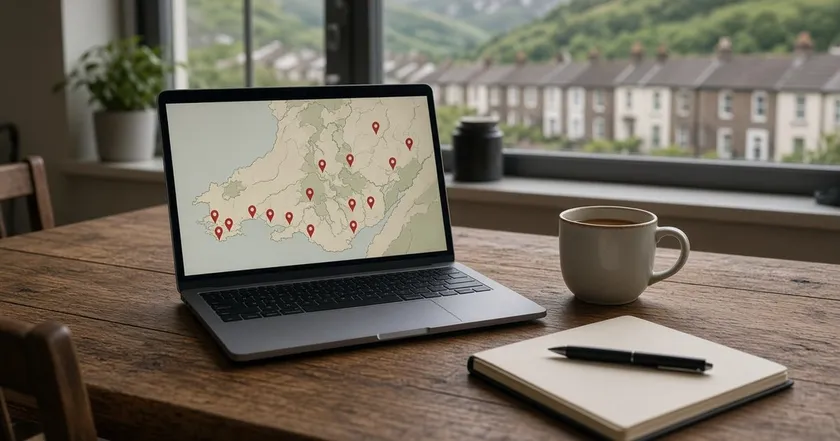
Most small businesses in South Wales don't serve one postcode. A plumber in Merthyr Tydfil might cover Aberdare, Pontypridd and the Heads of the Valleys. A Caerphilly cleaner might work across Cardiff and Newport. A Bridgend electrician might go as far as Swansea.
That's where local SEO gets tricky. Google wants to show people the nearest, most relevant and most trusted business for what they searched. If you work across several towns, you need to make it clear where you work, what you do there and why people should trust you, without filling your site with copy-and-paste town pages.
This guide covers how local SEO works across South Wales, what to set up first, and the mistakes that hold small businesses back.
What local SEO means for a South Wales business
Local SEO is the work that helps your business appear when people nearby search for what you do. That includes:
- The map results (the "local pack") that show three businesses with a map, driven mainly by your Google Business Profile
- The normal results underneath, driven by your website
- Searches with a town in them ("roofer Pontypridd") and searches without one ("roofer near me"), where Google uses the searcher's location
In Cardiff, Swansea or Newport you're up against lots of nearby businesses. In the Valleys there are often fewer competitors, but customers are spread out and searches are split across many town names.
If you're focused on Cardiff specifically, our local SEO guide for Cardiff businesses goes into the city in more detail. This post is about covering the wider region.
Start with your Google Business Profile
Your Google Business Profile is usually the quickest win, because it controls how you show on Google Maps and in the local pack.
Set your address and service area correctly
If customers visit you (a shop, salon or garage), show your address. If you travel to customers (most trades and mobile services), you can hide your address and set a service area instead.
A few points that matter in South Wales:
- List the towns and areas you genuinely cover. Google lets you add up to 20, but it's better to be honest than to stretch. Listing Swansea when you rarely go west of Bridgend won't help.
- Your verified location still matters. A service area doesn't let you rank everywhere you list. You'll tend to show most strongly near your base, which is why your website has to do the work for the towns further out.
- Don't use a virtual office or a mate's address to look local somewhere else. Google can suspend profiles for this, and it's hard to undo.
Fill in everything
Choose the most accurate primary category, add secondary categories that fit, list your services, add opening hours, and upload real photos of your work. Post updates when you finish a job or run an offer. Our guide on how to optimise your Google Business Profile walks through each section.
Make your website back up every area you serve
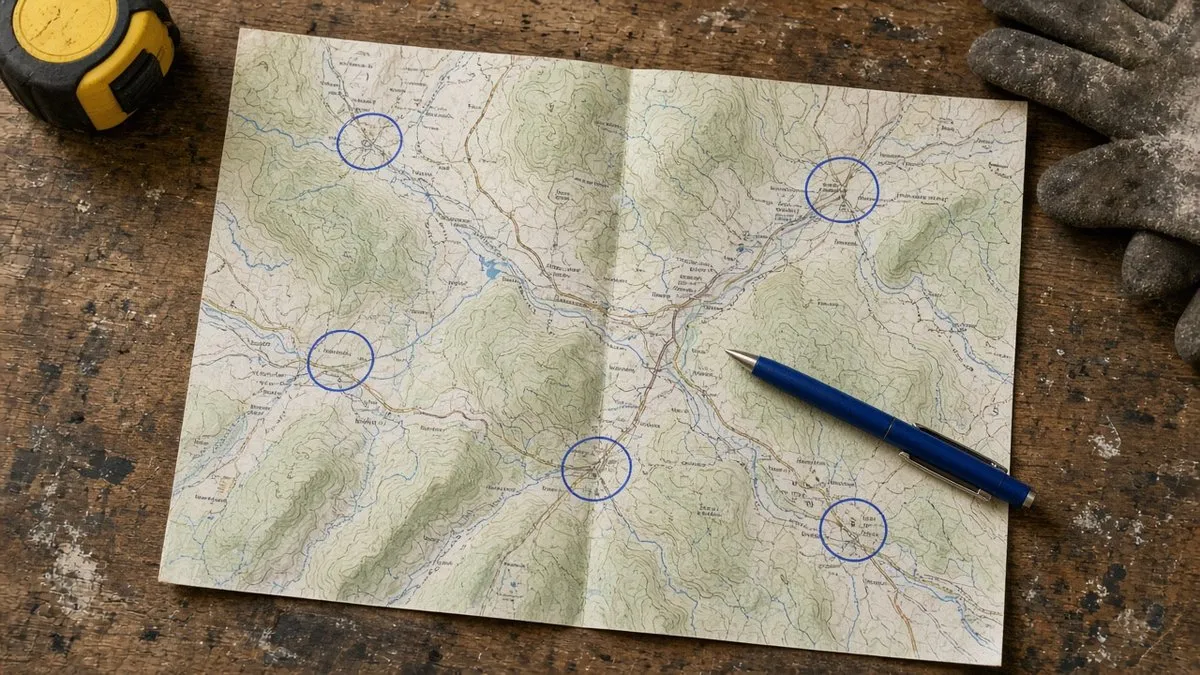
Google Business Profile helps near your base. For the wider region, your website is what tells Google you're a real option in Merthyr, Caerphilly or Newport.
Build service pages first, town pages second
Start with a clear page for each main service (for example, "boiler installation" and "boiler repairs" rather than one "heating" page), explaining what you do, how you price and how to get in touch.
Then add town pages for the areas that matter most to your business, usually the places you get the most work from or want more work in.
Write town pages that aren't spam
Google is good at spotting pages where only the town name changes. Those "doorway pages" rarely rank and can drag the rest of your site down. A useful town page includes things that are actually true for that area:
- Jobs you've done there, with photos (only real ones, with the customer's permission)
- How quickly you can usually get there and which nearby areas you cover from it
- Local details that affect the work, such as older terraced housing, steep streets or parking
If you can't write something genuinely different about a town, it may be better to mention it on a broader regional page than give it a page of its own.
Keep your details consistent
Your business name, contact details and the areas you cover should match across your website, Google Business Profile, Facebook page and directory listings, so Google can be confident it's dealing with one business.
Get the basics right
A slow, clunky site on mobile loses people before they ring. Lots of local searches happen on phones, sometimes on patchy signal up the Valleys. Make sure pages load quickly, your contact button is easy to find, and each page has a clear title that mentions the service and area.
Should you think about Welsh-language searches?
If your customers include Welsh speakers, or you work with schools, councils or organisations that value Welsh, a few Welsh-language touches (such as bilingual key service descriptions) can help you stand out and build trust. Treat it as a business decision rather than an SEO shortcut.
Reviews: the trust signal people actually read
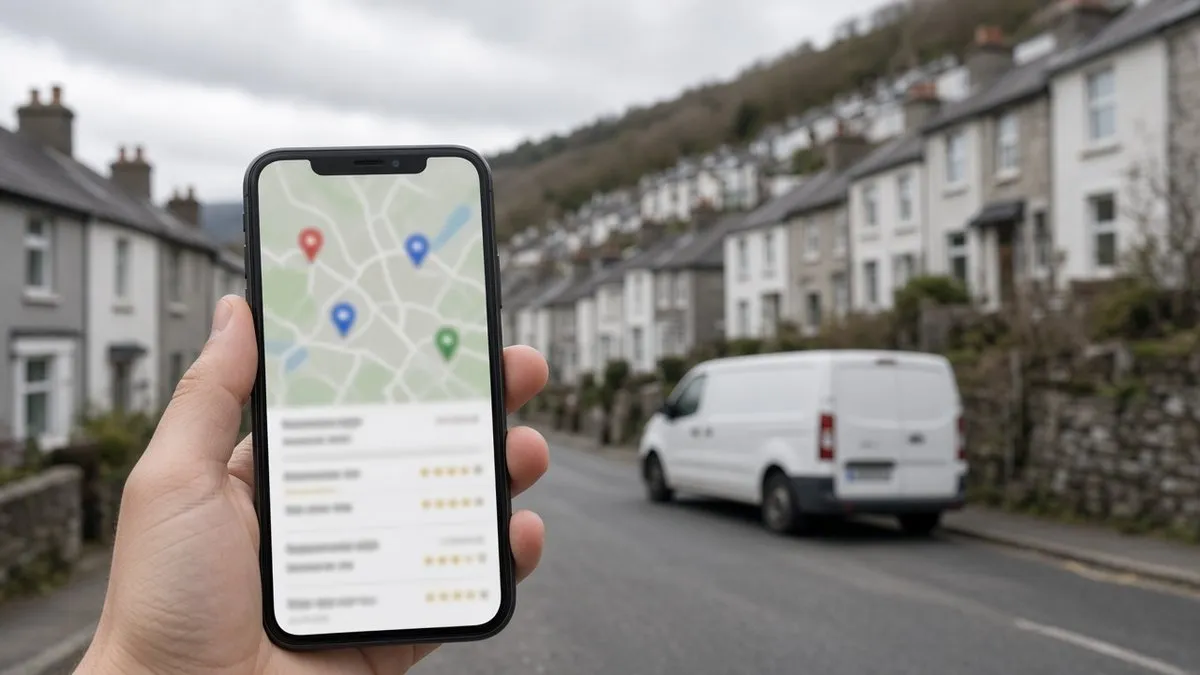
Google reviews affect both where you appear and whether people choose you. In smaller communities word travels fast, and a steady stream of recent, genuine reviews tells people you're active and reliable.
- Ask every happy customer, ideally as soon as the job's finished. A direct link to your review form makes it easy.
- Reply to every review, good or bad. A calm, helpful reply to a poor review often reassures people more than a perfect score.
- Never buy or swap reviews. It breaks Google's rules and can get reviews removed or your profile restricted.
There's more on this in our guide to getting more Google reviews.
Links and mentions from South Wales websites
Links from other websites still matter, and local ones are especially useful because they connect you to an area. Realistic sources for small businesses include:
- Local sports clubs, events and charities you sponsor or support
- Suppliers, trade bodies and local business groups you belong to
- Local news when you've done something genuinely newsworthy
Avoid paid link schemes and low-quality directories.
What to do first if time is tight
If you're running the business yourself and can only spare a couple of hours a week, work through it in this order:
- Claim and complete your Google Business Profile, with an honest service area and real photos.
- Start asking for Google reviews and reply to the ones you get.
- Make sure each main service has its own page on your website.
- Add town pages for your two or three most important areas, with real local detail.
- Check your details match everywhere you're listed.
- Look for a few genuine local links, starting with organisations you already work with.
Then watch Google Search Console every month or so. It shows which searches you appear for, which towns are starting to show up, and which pages are getting clicks. That's the most reliable way to see whether your work is paying off.
When to get help
Plenty of small businesses handle the basics themselves. It's worth getting help when you're covering lots of towns, competing in Cardiff or Swansea against bigger firms, or your website itself is holding you back.
NC Digital is based in Merthyr Tydfil and works with small businesses across South Wales. Our local SEO service for South Wales covers Google Business Profile optimisation, on-page and content work, citations and plain-English monthly reporting, and if you're further afield our SEO in Wales page explains how we work across the country. You can also see what's included in our local SEO and Google ranking service.
Frequently asked questions
What is local SEO for a South Wales business?
It's the work that helps your business show up when people nearby search for your services, both in the Google Maps results and the normal results. For most South Wales businesses that means a strong Google Business Profile, a website with clear service and town pages, genuine Google reviews and a few local links.
Can I rank in towns where I don't have an address?
Yes, through your website, though it's harder in the map results. Your Google Business Profile tends to rank best near your verified location, so for towns further away, useful town pages, local work examples and reviews from customers in those areas do most of the work.
How many towns should I target?
Start with the two or three that bring you the most work, or that you most want more work from. Do those properly before adding more. A few strong town pages beat twenty thin ones.
How long does local SEO take in South Wales?
It depends on how competitive your service is and where you're starting from. Changes to your Google Business Profile can show within weeks, while website rankings for competitive towns usually take a few months. Search Console will show you whether things are moving.
Do I need separate pages for every Valleys town?
No. Only create a page when you can say something genuinely useful about working in that town. Otherwise, mention the area on a broader regional page.